
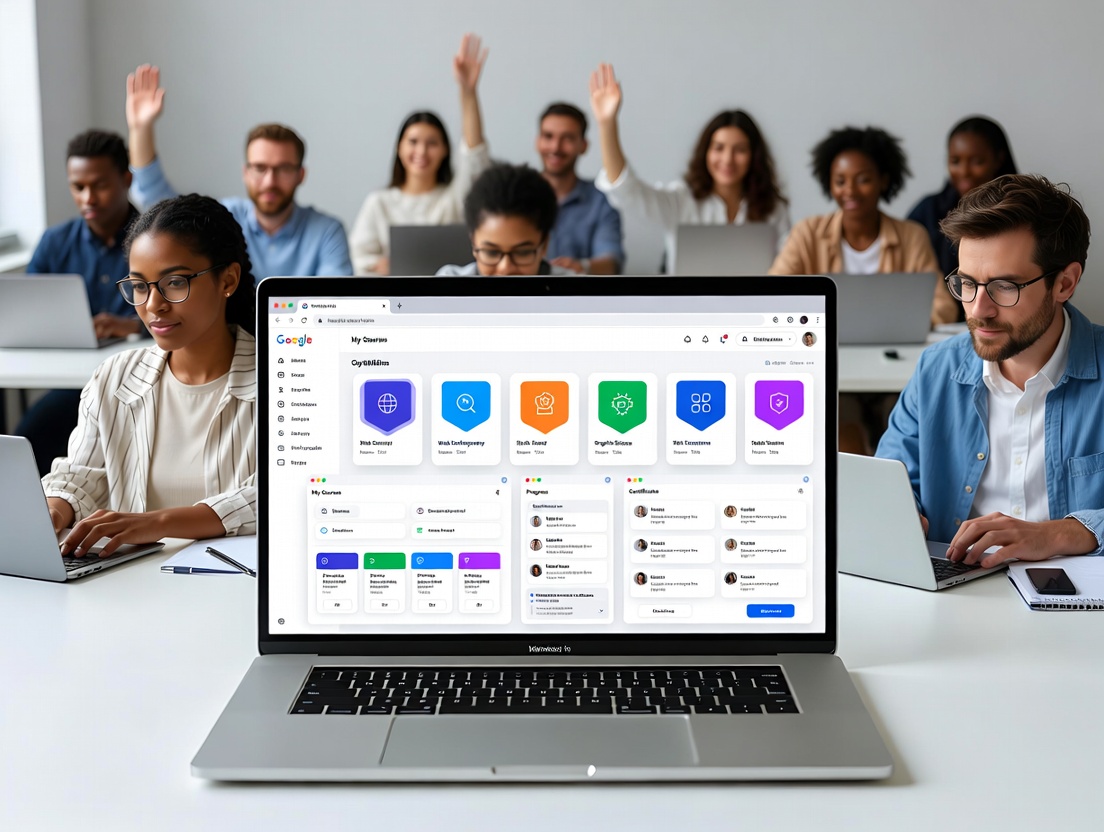
Google Online Courses: Certifications That Lead to Real Jobs
Google Online Courses: Certifications That Lead to Real Jobs
As the job market continues to evolve, employers are placing increasing value on practical skills over traditional credentials alone. This shift has pushed major technology companies to step directly into education and online courses Google has emerged as one of the most impactful examples.
Google online courses are designed to help learners gain job-ready skills in fast-growing digital fields, without the time or cost of a traditional degree. But how effective are these courses, and who should take them?
What Are Google Online Courses?
Google online courses are professional training programs created by Google and delivered through trusted online learning platforms. These courses focus on high-demand skills such as:
-
IT support
-
Data analytics
-
Digital marketing
-
Project management
-
UX design
Each course follows a structured curriculum, includes hands-on projects, and ends with a professional certificate.
At Uni-B Academy, we view these programs as examples of how industry-led education bridges the gap between learning and employment.
Why Google Certifications Matter Industry Recognition
Google certifications are built around real-world job requirements. According to Google, these programs are designed to prepare learners for entry-level roles in under six months.
Skills Over Theory
Unlike purely academic courses, Google online courses emphasize applied learning practical tasks that mirror workplace scenarios. This approach aligns with principles discussed in effective evaluation techniques for teachers, where assessment focuses on skill application.
Employer Confidence
Research from Harvard Business Review shows that employer-issued certifications improve hiring confidence because they reflect relevant, current skills.
How Google Online Courses Support Career Growth
Google online courses are especially valuable for:
-
Career switchers entering tech or digital roles
-
Professionals upgrading in-demand skills
-
Students seeking job-ready credentials
-
Entrepreneurs improving operational knowledge
They also support lifelong learning trends highlighted by the World Economic Forum, which identifies continuous upskilling as essential for future employment.
Learning Experience and Structure
Google online courses typically include:
-
Short, structured video lessons
-
Interactive quizzes
-
Real-world projects
-
Career resources and job boards
This learning design reflects insights from latest research in educational technology, where modular and applied learning improves retention and outcomes.
Limitations to Consider
While powerful, Google online courses have some limitations:
-
Certificates are not academic degrees
-
Some roles still require advanced qualifications
-
Self-discipline is essential for completion
Understanding educational psychology helps learners manage motivation and expectations in self-paced environments.
Google Online Courses in the Broader Learning Ecosystem
Google online courses work best when combined with:
-
Broader foundational learning
-
Practical experience or internships
-
Ongoing skill development
They complement broader online learning platforms and structured curricula discussed across Uni-B Academy.
Final Thoughts: Learning Designed for Employability
Google online courses demonstrate a clear shift toward employer-driven education. They focus on what matters most: skills, relevance, and readiness.
At Uni-B Academy, we encourage learners to choose learning paths that align with real-world goals. For those seeking fast, practical entry into digital careers, Google online courses offer a strong, credible starting point.
Learning that leads to opportunity is learning done right.
Tags :